
Vacation rental water damage insurance is the single most important coverage most STR hosts overlook. Water damage costs U.S. property owners $13 billion annually — and STR properties face elevated risk every single day.
Vacation rental water damage insurance is the silent foundation of every healthy STR business. When investors calculate risk, they tend to focus on headline-grabbing events: unauthorized parties, hurricanes, fires. While devastating, those are relatively rare. The true financial killers are the silent, hidden risks that occur every single day.
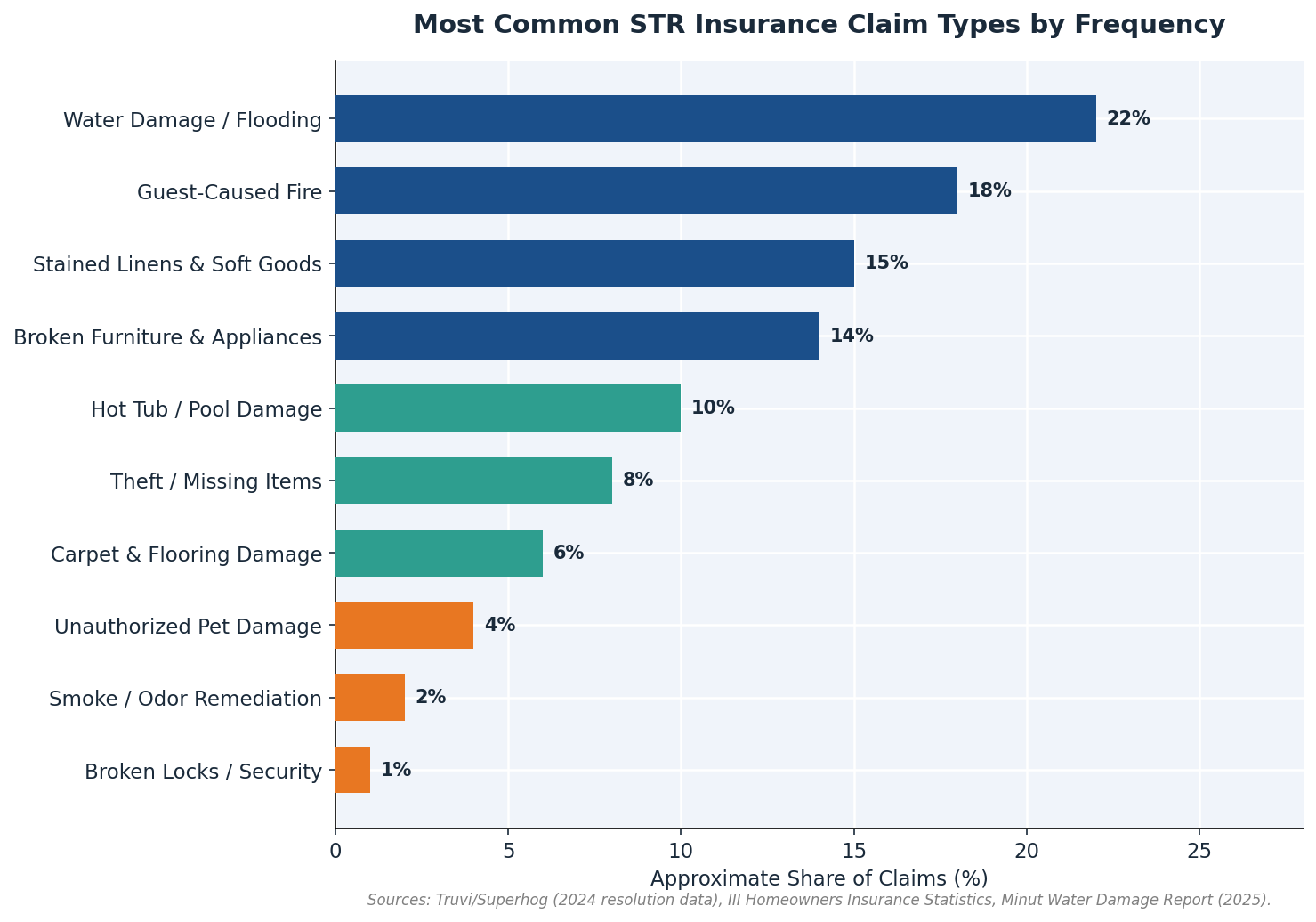
Water damage alone costs U.S. property owners over $13 billion annually, and it accounts for nearly one in five home insurance claims. In an STR context, where transient guests rarely report minor issues and properties frequently sit vacant between bookings, the risk is significantly elevated.
In this guide, we examine the most common and costly property damage claims facing STR hosts, the data behind them, how to prevent them, and how to ensure your vacation rental water damage insurance is structured to survive them.
Water damage is the most frequent and arguably the most insidious threat to a short-term rental business. Unlike a fire, which is immediately apparent, water damage often starts small and goes unnoticed for days or weeks, compounding the destruction with each passing hour.
The Environmental Protection Agency (EPA) reports that 10% of homes have undetected leaks wasting 90+ gallons of water per day. In an owner-occupied home, a homeowner notices a dripping ceiling. In an STR, transient guests rarely report minor issues.
| Source | Frequency | Avg Repair Cost |
|---|---|---|
| Burst/frozen pipes | 24% | $15K–$50K |
| Appliance leaks | 22% | $5K–$20K |
| Plumbing overflows | 19% | $3K–$15K |
| HVAC condensate clogs | 14% | $2K–$8K |
| Roof leaks | 12% | $5K–$25K |
Source: Minut, 2025
A single moderate water damage incident easily exceeds $10,000 in repair costs. But repair cost is only the beginning.
The Mold Multiplier: Water damage that goes undetected for 24–48 hours creates ideal conditions for mold. Mold remediation can add $5,000–$25,000.
The Revenue Loss: A burst pipe requires weeks of remediation. During this time, you cancel reservations and refund guests, resulting in massive lost income.
The Booking Platform Penalty: Canceling confirmed Airbnb reservations causes financial penalties, reduced search ranking, and potential listing suspension.
A standard homeowners policy often limits water damage coverage or excludes it entirely if the property is unoccupied for more than 30 days. Your vacation rental water damage insurance must include:
While less frequent than water damage, fires are exponentially more severe. According to the National Fire Protection Association (NFPA), cooking equipment is the leading cause of home fires, accounting for nearly half of all reported home fires.
In an STR, fire risk is elevated because guests are unfamiliar with appliances. They do not know the stove runs hot or that the grill has a propane leak. Combined with vacation-mode inattentiveness, this creates significantly higher fire risk than an owner-occupied home.
Common STR fire causes include kitchen accidents, improper use of outdoor amenities (fire pits, charcoal grills), smoking despite “no smoking” policies, and electrical failures in older properties.
A standard homeowners policy will deny guest-caused fire claims under the business activity exclusion. A commercial STR policy treats guest-caused fire as a covered peril. Your policy must include Replacement Cost Value for both dwelling and contents, plus separate smoke damage coverage.
Theft and vandalism are persistent annoyances that erode profitability. According to resolution data from Truvi, theft and missing items are among the top 10 most frequent guest damage reports.
Commonly stolen items: smart TVs, high-end kitchen appliances (espresso machines, blenders, air fryers), luxury linens, artwork, outdoor furniture, Bluetooth speakers.
Standard landlord policies are notoriously weak on contents coverage. A commercial STR policy provides robust “Contents Coverage” with no sublimits for guest-caused damage or theft.
Documentation is Critical: Maintain a detailed property inventory with purchase receipts, photos, and serial numbers stored in the cloud.
As STR operators manage direct booking websites and collect guest payment information, cybercrime risk has emerged. The average cost of a data breach for a small business is approximately $200,000.
Cyber Liability Coverage is an emerging add-on for commercial STR policies. It covers legal defense, notification costs, credit monitoring for affected guests, and regulatory fines.
Insurance is your financial safety net, but prevention is the best strategy. Professional STR operators implement technology to mitigate these hidden risks before they result in a claim.
The short-term rental business is highly profitable, but it requires vigilance against the silent threats. Vacation rental water damage insurance, plus fire and theft protection, are the foundation of a resilient business.
For deeper context, read our companion guides on the true cost of being uninsured and when to get STR insurance during your buying timeline.
STR Insurance Advisors structures policies with broad water damage, mold remediation, fire, and contents coverage — exactly what a vacation rental needs.